
On November 12, SyracuseCoE hosted a presentation from Columbia University faculty member Bianca Howard as part of its Research & Technology Forum series. Professor Howard is an Assistant Professor of Mechanical Engineering in the Fu Foundation School of Engineering and Applied Science at Columbia University, where she leads the Building Energy Research Laboratory (BERL).
Howard’s talk highlighted two of her recent research projects– one focused on co-benefits of decarbonization in the context of New York City residential buildings; the other studied AI training models for building controls.
In the first part of Howard’s presentation, she discussed a collaborative effort between the Building Energy Research Lab, the Center for Political Economy at Columbia, and the Urban Democracy Lab at New York University. The cross-disciplinary team of engineers and sociologists analyzed the potential co-benefits of decarbonization practices in residential buildings, conducting interviews to understand how stakeholders factored these co-benefits into their decisions.
Howard’s research utilized multi-objective optimization to develop decarbonization pathways that consider not only cost and greenhouse gas emissions, but also broader social goals – co-benefits like job creation and energy burden (the proportion of household income spent on energy bills), along with livability, comfort, and resilience.
In a study of buildings in New York City’s West Harlem neighborhood, the researchers compared retrofit strategies that minimize cost and emissions against strategies that also include metrics like energy burden and job creation. The results show that incorporating these additional objectives leads to quite different retrofit portfolios, emphasizing the need for decision-support tools that make these trade-offs visible and explicit.
The second half of Howard’s presentation focused on using AI tools to optimize building energy systems. Howard’s research team studied how simulators can train reinforcement learning controllers for HVAC operations, and how closely those simulators need to represent actual physical systems.
Focusing on simulations, the team at the Building Energy Research Laboratory explored training AI agents using several EnergyPlus models with different thermal properties. They found that imprecise models can be used to train agents that result in good control performance. This potentially indicates that intelligent control agents could be developed with just a single site visit, rather than relying on weeks of historical data.
As Howard notes, these studies show how building physics, optimization, and AI can come together to create practical, scalable solutions for building decarbonization across design, policy, and operational contexts.
Slides from this presentation are available below.
PRESENTATION:
FOR MORE INFORMATION:
- Kerr, M., & Howard, B. (2025). Simulator accuracy requirements for RL-based building temperature control. Proceedings of the 16th ACM International Conference on Future and Sustainable Energy Systems, 949–953. https://doi.org/10.1145/3679240.3734668
SPEAKER:
Bianca Howard, Ph.D.
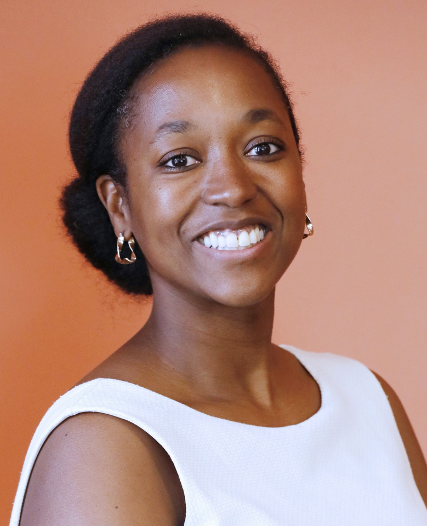
Dr. Bianca Howard is an Assistant Professor in the Department of Mechanical Engineering at Columbia University, where she leads the Building Energy Research Laboratory (BERL). Her research integrates building physics, optimization, and artificial intelligence to support decision-making for building decarbonization at both the building and city scale.
Dr. Howard earned her B.S. in Mechanical Engineering from the University of Nebraska–Lincoln and her M.S. and Ph.D. in Mechanical Engineering from Columbia University, where she was an NSF IGERT Fellow.
Following her doctoral studies, she was a postdoctoral researcher in the Urban Systems Laboratory at Imperial College London and later served as a Lecturer and Senior Lecturer in the Department of Architecture, Building and Civil Engineering at Loughborough University. While at Loughborough, she was awarded a prestigious EPSRC Innovation Fellowship to study the flexible timing of energy consumption in communities using intelligent control approaches.
Her research is guided by a commitment to improving the energy performance of buildings and developing practical strategies to reduce greenhouse gas emissions across the built environment.